Losing someone is hard enough on its own. The last thing anyone should have to deal with in those first weeks is a pile of phone calls, paperwork, and follow-up letters to institutions that have no idea what you’re going through. But that’s exactly what most families face, and most of them aren’t prepared for how long it actually takes.
A death notification service is a professional service that contacts the banks, government agencies, insurers, utilities and online platforms that need to be informed after someone dies, handling the paperwork and follow-up on the family’s behalf. You don’t have to make the calls. You don’t have to repeat yourself over and over. Someone else manages the process while you focus on your family.
More Work Than Most People Expect
Most people assume closing out someone’s accounts and notifying the right agencies takes a few days. In reality, it usually takes months, and even then, things get missed.
Think about how much of a person’s life is tied to institutions. There’s the bank where they had a checking account. The credit cards. The phone bill they paid every month. The doctor’s office with their records. The social media profiles that are still active. The pension they were drawing from. The mortgage company. The insurance policies. The email provider. The subscription services that auto-renew every month, whether anyone is using them or not.
Each one of those requires a separate process. Some want a certified copy of the death certificate. Some have their own forms. Some require you to call in and speak with a specific department. Some need written letters sent by mail. A few have online portals, but many don’t. And every single one of them is going to ask you for the same information from scratch, as if the previous ten phone calls never happened.
It’s a lot. And when you’re in the middle of grieving, it can feel impossible.
What Happens When Notifications Get Delayed
This isn’t just about paperwork piling up. Delays in notifying the right organizations can create real, lasting problems.
Identity theft is one of the most serious risks. Deceased individuals are targeted by fraudsters fairly often because their credit files stay open until someone closes them. Every day that passes without notifying the credit bureaus is a window of vulnerability. Fraudsters take out loans, open accounts, and rack up debt in the name of someone who has no way to dispute it.
There’s also the issue of money that never gets claimed. Pension funds, old bank balances, and investment accounts go uncollected far more often than most people realize. Families simply don’t know to look for them, or they assume someone else is handling it. Billions of dollars sit in state unclaimed property offices because the right notifications were never made. Unclaimed property searches are included in our most comprehensive coverage, which contacts those offices directly on the estate’s behalf.
On top of that, subscriptions and automatic payments keep running. Streaming services, gym memberships, software plans, magazine subscriptions, they all keep charging the account until someone cancels them. That’s money coming directly out of the estate, and it adds up faster than you’d think.
Missing notifications to government agencies like the IRS or Social Security can also cause complications down the road. Overpayments get issued, records don’t get updated, and sorting it out later can take more time and effort than the original notification would have.
Who Needs to Be Contacted
The list is longer than most families realize going in. Here are the types of organizations that typically need to be notified after someone passes:
The three main credit bureaus, Experian, Equifax, and TransUnion, need to place a deceased alert on the credit file to prevent fraud. The Social Security Administration needs to know so that payments stop and surviving spouse benefits can be processed if applicable. The IRS needs to be informed for final tax filings and to close the file properly.
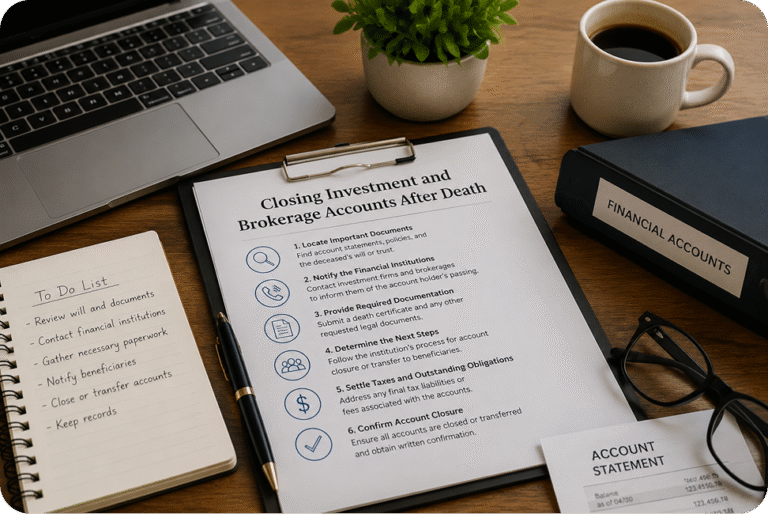
Banks and credit unions need to be contacted to freeze or transfer accounts. Credit card companies need to close accounts. Mortgage lenders and auto loan servicers need formal notification. Investment accounts, brokerage firms, and retirement accounts all have their own notification and transfer procedures.
Phone carriers, internet providers, and utility companies need to stop billing. Insurance policies, life, health, home, and auto all need to be contacted separately. Doctors, hospitals, and pharmacies need to update their patient records. The state DMV needs to know so the driver’s license can be voided and identity fraud is less likely.
Social media platforms have their own processes for memorializing or removing accounts. Alumni organizations and professional associations often need to be notified as well. And depending on the person’s situation, there may be pension providers, annuity companies, and state unclaimed property offices that need to hear from you, too.
That’s a long list. Most families go into the process thinking they can handle it on their own, and many of them end up burning out somewhere in the middle of it.
How Final Closures Handles It
Final Closures was built specifically to take this process off a family’s hands. The idea is simple: you shouldn’t have to spend months navigating bureaucracy while you’re still processing a loss.
The process starts with creating an account on the Final Closures online portal. The site is encrypted and DigiCert verified, which means the sensitive information you share Social Security numbers, account details, and dates, stays protected throughout the process.
Once you’re signed up, you choose a package based on what you need covered. Plans start at $269 for digital accounts only and go up to $2,599 for the most comprehensive tier, which covers 106 entities across nine categories.. The entry-level Essential Foundation package covers twelve entities across financial, government and insurance notifications. The higher tiers bring in pension providers, investment firms, state unclaimed property offices, utilities and a wider range of financial institutions.
After you select a plan and submit the necessary details, the Final Closures team gets to work. They contact each organization through the proper channels, document every notification, and keep everything organized on your behalf.
You can follow along through a secure online dashboard that shows you in real time what’s been completed and what’s still in progress. You’re not left wondering whether something was handled or waiting for someone to call you back with an update.
Why People Choose This Over Doing It Themselves
The honest answer is that most people who try to handle notifications on their own don’t realize what they’re getting into until they’re already in the middle of it.
Part of what makes it so difficult is the emotional weight of it. Every call to a bank or a government office means explaining the situation again. It means answering questions about someone who just died, often to someone reading from a script who doesn’t know your family and isn’t in a position to make it easier. Doing that ten times is hard. Doing it forty or fifty times over several months is something else entirely.
Hiring an estate attorney is one option, but attorneys are expensive, and most of the notification work doesn’t actually require legal expertise. Our side-by-side cost comparison sets out the difference in practice. It just requires time, organization, and persistence. A service like Final Closures fills that gap at a much more accessible price point.
Final Closures holds an A+ rating with the Better Business Bureau, which reflects a consistent track record of handling this kind of work professionally and carefully. The team is trained to manage sensitive cases, which matters when you’re dealing with something as personal as a family member’s passing.
A Practical Decision, Not a Luxury
There’s a tendency to think of services like this as something families get when they want to avoid inconvenience. That’s not really what it is. When notifications don’t get made on time, real things go wrong. Fraud happens. Money disappears. Complications pile up that take even longer to resolve than the original work would have.
A death notification service is a practical way to protect an estate, close accounts properly, and make sure nothing falls through the cracks. For families who are already stretched thin, it’s also a way to preserve a little energy for the things that actually matter during that time.
Final Closures makes it possible to hand off the hard administrative work to people who know exactly what they’re doing, and to focus on what comes next. You can compare all six packages to see which level of coverage matches your loved one’s affairs, or speak to the team first if you would rather talk it through before deciding.