Nobody wants to think about paperwork when someone they love is in hospice. You want to sit with them, hold their hand, and make the most of the time you have left together. But the truth is, getting a few things in order now will save your family from a really hard situation later. Going through an end-of-life planning checklist while your loved one is still here is not cold or clinical; it is one of the most practical ways to show you care. The families who do this walk away from loss with one less thing crushing them..
Why an End-of-Life Planning Checklist Matters for Hospice Families
Grief is already exhausting. The last thing a grieving family needs is to spend months chasing down bank accounts, dealing with bills that keep coming, or figuring out who gets what because nothing was written down. An end-of-life planning checklist puts all of that in order before it becomes someone else’s problem to solve in the worst possible moment. Doing this now is not giving up. It is giving your family breathing room when they need it most.
What to Include in Your Checklist Before the Passing
You do not have to do everything at once. Start with what you can and work through it together over time.
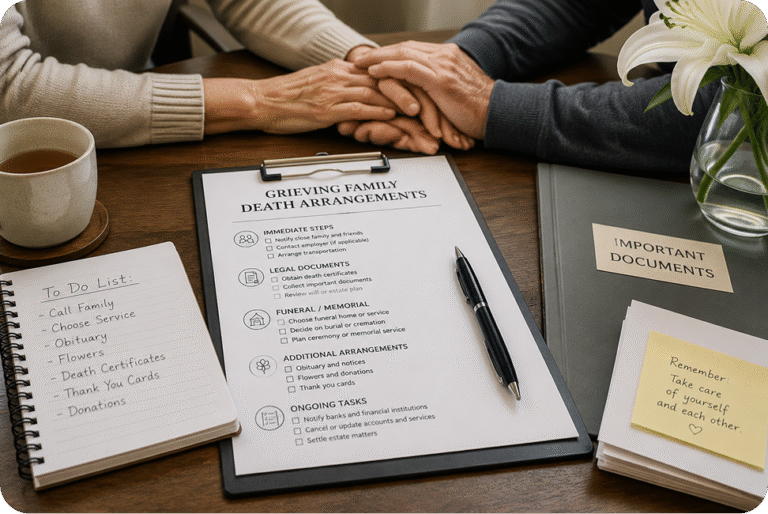
Legal Documents: Track down the will, power of attorney, healthcare directive, and any trust paperwork. Check that everything is still current and make sure the right people know exactly where to find it. Do not tuck it somewhere so secure that no one can get to it in a hurry.
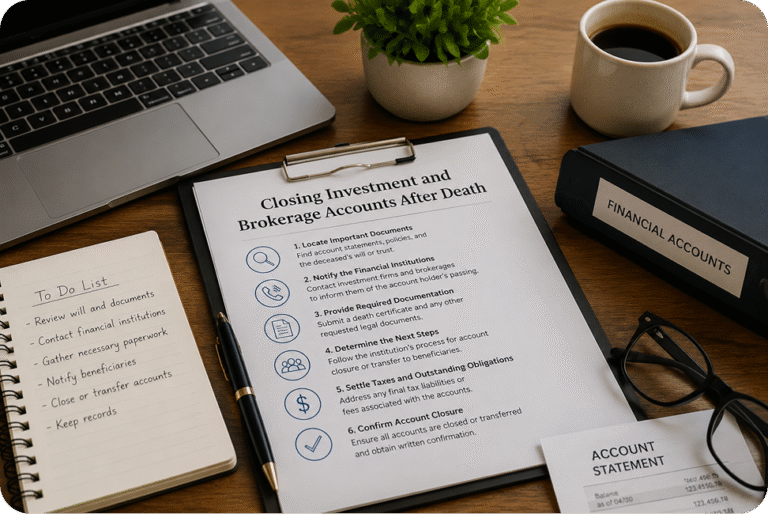
Financial Accounts: Write down every bank account, investment, retirement fund, and insurance policy your loved one has. Include the account numbers and the name of each institution. Double-check that the right beneficiaries are listed, because those names take priority over anything written in the will.
Digital Assets: Most people have more online accounts than they realize email, social media, streaming services, and even digital wallets. Write down usernames and any instructions for handling these accounts, and keep that list somewhere the family can find it. Facebook lets users pick someone to look after their account after they pass, which is worth setting up ahead of time. Keep all of this as part of your end-of-life planning checklist so nothing gets forgotten.
Property and Possessions: If your loved one owns a home, a car, or anything else of value, track down the titles, deeds, and any loan or lease paperwork. Write down what has already been set aside for specific family members so nothing gets missed or disputed later.
What to Do After Someone Dies
The days right after a loss move faster than anyone expects. Having already thought through what to do after someone dies means you are not making big decisions while you are barely holding it together.
First, get the death certificate. You will need more copies than you think, so order several right away. Let close family know, contact the hospice team, and get in touch with the funeral home. Once that is done, the next stretch involves closing and transferring accounts, and that is where things get slow and complicated.
Every bank, every government office, every phone company has its own process and its own forms. Doing all of that on your own can drag on for months. A death notification service like Final Closures handles all of it for you: banks, credit bureaus, government agencies, healthcare providers, phone carriers, and social media platforms, so your family is not stuck making painful phone calls after painful phone calls.
The Estate Checklist After Death
Even after the first round of notifications is done, there is still work ahead. The estate checklist after death is about wrapping everything up the right way.
This covers filing the will with the probate court, telling the IRS, closing or moving bank accounts, clearing any debts, and getting assets to the right people. Any pension, retirement account, or life insurance policy has to be handled separately, and each one will ask for a death certificate.
The executor carries the legal weight of making sure all of this happens correctly and on time. For anything complicated, a probate attorney is worth bringing in. For the notification work itself, a professional service can take on most of that load without the legal price tag.
Preparing Now Makes All the Difference
Hospice is one of the hardest things a family goes through. But it also gives you a window of time to sit together and sort a few things out before they become someone else’s burden. Working through an end-of-life planning checklist as a family means the people left behind get to focus on missing their person, not managing their affairs.
None of this takes care of itself. But it does not have to fall on a grieving family alone, not when the right support is there.