The days after a loss are heavy. You are grieving, and at the same time, people are calling, decisions need to be made, and a long list of notifications needs to go out. This guide from Final Closures gives you a clear picture of who to notify after death, so nothing important gets missed while you are still finding your footing.
Before you start making calls, get your paperwork in order. You will need the deceased’s Social Security number and multiple certified copies of the death certificate. Order at least ten to fifteen copies. Banks, insurance companies, and government agencies each require their own original copy, and you will go through them faster than you expect.
Who to Notify After Death: Who Needs to Know First
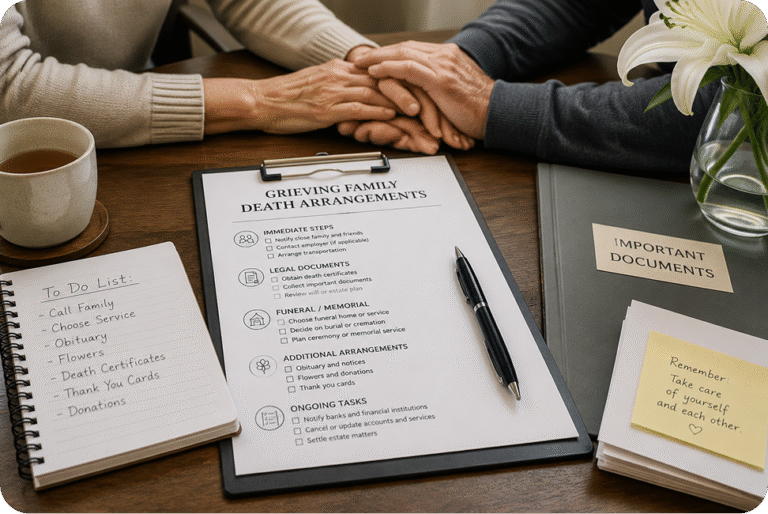
Before any official notifications go out, the people closest to the deceased need to hear the news directly. Call immediate family members first. Then reach out to close friends, neighbors, coworkers, and anyone who would want to know personally rather than through a social media post.
Reach out to the deceased’s doctor, therapist, or any regular healthcare provider they saw. This lets the medical office close their records and stops any prescription renewals or appointment reminders from showing up.
If there are children or pets who depend on the deceased, arrange care for them right away. This is a practical and urgent need that cannot wait for paperwork.
Government Agencies to Notify After Death
This is one of the most important parts of the after-death checklist. Government agencies need to be informed promptly to stop benefit payments and protect the deceased’s identity.
Social Security Administration: Contact the SSA as soon as possible by calling 800-772-1213. In many cases, the funeral home submits the initial notification on your behalf, but you still need to follow up directly. Any Social Security payments received in the month of death or after must be returned. Ask about survivor benefits for a spouse or dependent children at the same time. There is also a one-time death benefit of $255 available to eligible surviving spouses.
Internal Revenue Service: The deceased’s final income tax return must be filed. An executor or surviving spouse handles this. If the estate earns income after the death, a separate estate tax return may also be required.
Department of Motor Vehicles: Cancel the deceased’s driver’s license or state-issued ID card by notifying your state’s DMV. This prevents the ID from being used fraudulently.
Board of Elections: If the deceased was a registered voter, notify your state or county Board of Elections to have them removed from the voter rolls.
Veterans Affairs: If the deceased served in the military, contact the VA to ask about burial benefits, survivor benefits, and any pension adjustments that need to be made.
Other Government Programs: Check whether your loved one was receiving Medicare, Medicaid, a federal pension, or any other government benefit. If they were, contact each of those agencies separately. Stopping payments quickly saves you from having to deal with repayment demands later.
Financial Institutions and the Death Notification Checklist
Financial accounts need to be handled carefully and in the right order. Here is who to notify after death on the financial side:
Banks and Credit Unions: Contact every bank and credit union where the deceased held accounts. Bring the death certificate and any legal documentation showing your authority as executor or next of kin. Joint accounts with right of survivorship transfer automatically, but solely owned accounts will need to go through the estate process.
Credit Card Companies: Notify each credit card company of the death. Do not cancel all cards blindly before checking statements for automatic payments. Some autopay accounts, such as home insurance or utilities, may need to remain active temporarily while you sort out the estate. Ask each company whether the card carries any death benefit coverage.
Mortgage Lenders and Loan Companies: Call each lender directly if your loved one had a mortgage or any unpaid loans. Payments do not stop automatically, so someone needs to keep up with them until the property is sold or passed on to a beneficiary. Ask the lender if any loan protection insurance was tied to the account. If there was, it may cover some or all of what is still owed.
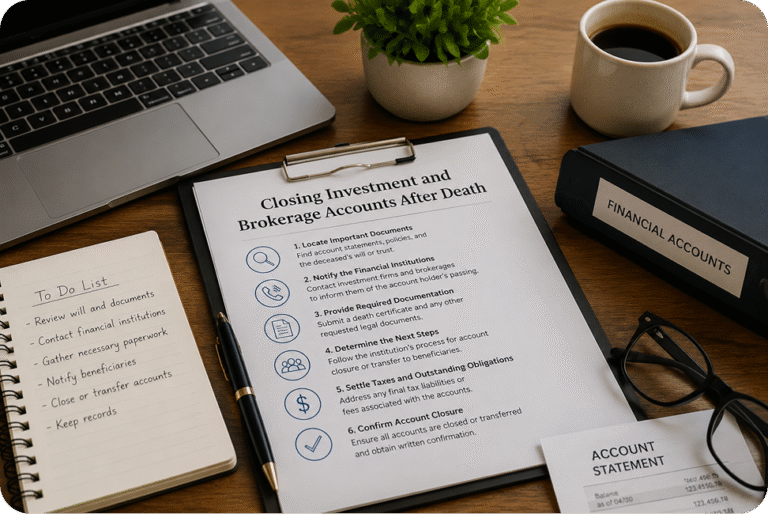
Investment Accounts and Financial Advisors: Contact stockbrokers, financial planners, and investment account managers. You will need to arrange for assets to be distributed to beneficiaries or transferred to the estate.
Pension Providers: If the deceased received pension payments, notify the provider immediately. Some pension plans include survivor benefits for a spouse, and the provider can walk you through the claim process.
Insurance Companies
Life insurance is often the most time-sensitive call on the notify after someone dies list because many policies have specific windows for filing claims.
Contact life insurance companies first and begin the claims process right away. You will need the policy number and a certified copy of the death certificate. If you cannot locate the policy documents, check old bank statements for premium payment records to identify the provider.
Also, notify health insurance companies to stop coverage and avoid future billing. If the deceased was the policyholder for a family plan, make arrangements for surviving family members to secure their own coverage. Under federal COBRA regulations, a surviving spouse or dependent child may be able to continue with the existing health plan temporarily.
Contact auto insurance and homeowners insurance providers as well. Do not cancel homeowners’ insurance if the property will sit empty during the estate process. Ask the insurer to convert the policy to vacant property coverage instead.
Credit Bureaus
Protecting the deceased’s identity is a step many families overlook on the who to notify after death checklist, and it is one of the most important. Identity theft of deceased individuals is unfortunately common.
Contact one of the three major credit bureaus: Equifax, Experian, or TransUnion. By law, they are required to share the notification with the other two, so you only need to contact one. Ask them to flag the account as deceased and freeze the credit report so no new lines of credit can be opened in the deceased’s name. Request a copy of their current credit report while you are at it. This helps you identify any accounts you may have missed.
Employer and Professional Contacts
Notify the deceased’s employer as soon as possible. The employer needs to process the final paycheck, handle any unused vacation pay, and stop direct deposits. Ask about life insurance coverage through the employer, retirement plan distributions, and any other workplace benefits owed to the estate or beneficiaries.
If the deceased was a member of a professional association, union, or trade organization, notify those groups as well. Some organizations offer death benefits or survivor support to members’ families.
Subscriptions, Memberships, and Online Accounts
This section of the who to notify after death process is easy to overlook but important for stopping unnecessary charges.
Go through the deceased’s bank statements and credit card records to identify active subscriptions. Streaming services, gym memberships, magazine subscriptions, software plans, and club memberships all need to be cancelled. Each one will require you to contact the company directly with a death certificate.
For social media accounts, you have options. Facebook allows you to memorialize the account so friends can still visit and post memories. You can also request permanent deletion. Instagram, Google, and other platforms have similar processes. Check each platform’s help section for their specific steps.
Let Final Closures Help You Through the Process
The who to notify after death process is long. It takes weeks and sometimes months to work through completely. Final Closures exists to support families through exactly this kind of overwhelming administrative burden. Having a clear death notification checklist is the first step. Having the right support team beside you makes every step after that more manageable.
Take it one category at a time. Keep records of every notification you send. And give yourself permission to ask for help.