
How To Notify The Social Security Administration When Someone Dies
The first 24 to 48 hours should be dedicated to obtaining an official pronouncement of death, contacting a funeral provider, securing the deceased’s property, and locating important documents.
Gather certified death certificates, financial records, insurance policies, and estate documents early to avoid bumps in the road when it comes time to start notifying organizations and settling your loved one’s affairs.

Our Recent Articles
Stay Informed with our latest insights
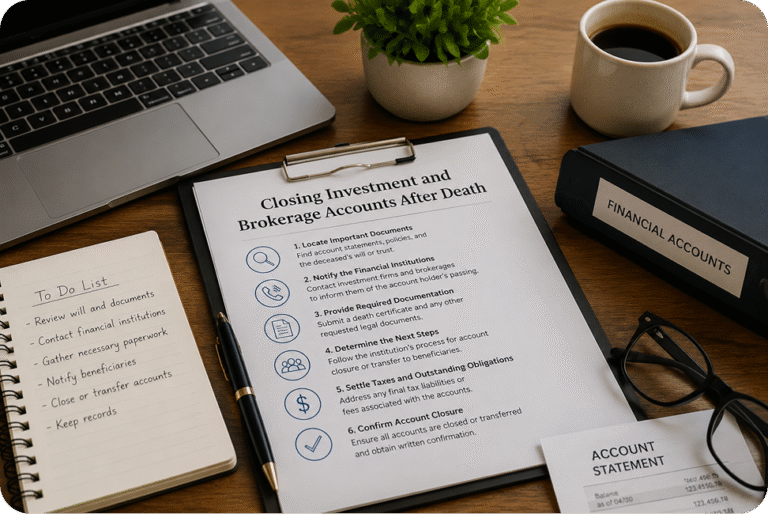
Closing Investment and Brokerage Accounts After Death
When someone in your family passes away, the to-do list feels endless. You are grieving, you are exhausted, and yet the financial accounts still need to be handled. One of those tasks is liquidating stocks after death, and it is something that cannot be put off for too long. This guide walks you through the whole process in a way that is easy to follow, even if you have never dealt with anything like this before.
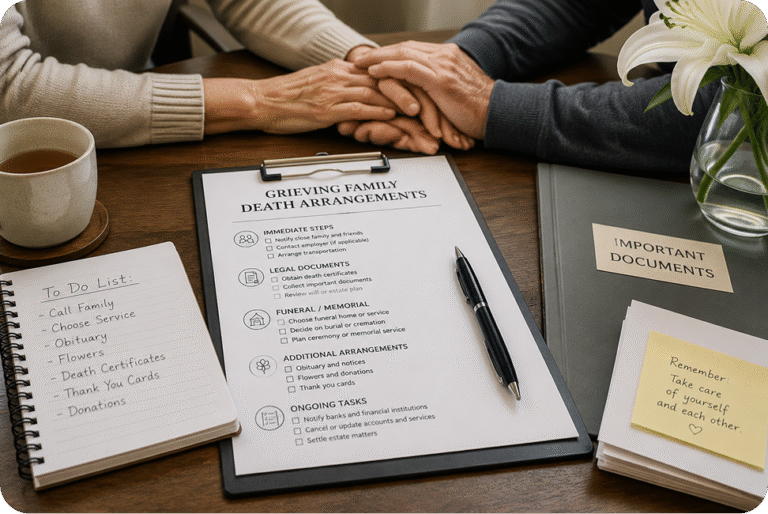
Grieving Family Death arrangements
When someone you love passes away, you are suddenly expected to make important decisions at the worst possible time. Having a clear death arrangements checklist gives your family a place to start when everything feels uncertain. It does not make the grief any lighter, but it does make the next steps a little clearer

Closing Estate Affairs for Hospice Patients
Nobody wants to think about paperwork when someone they love is in hospice. You want to sit with them, hold their hand, and make the most of the time you have left together. But the truth is, getting a few things in order now will save your family from a really hard situation later. Going through an end-of-life planning checklist while your loved one is still here is not cold or clinical; it is one of the most practical ways to show you care. The families who do this walk away from loss with one less thing crushing them

How to Freeze a Deceased Person’s Credit
When a loved one passes away, there are a lot of small, quiet tasks that fall on your shoulders during an already difficult time. One of the most important things you can do for them is to protect their financial identity. It is helpful to understand exactly what happens to debt when someone dies so you can take the right steps without feeling overwhelmed. This guide is here to walk you through that process simply and clearly, helping you look after their estate and their name during this tender time
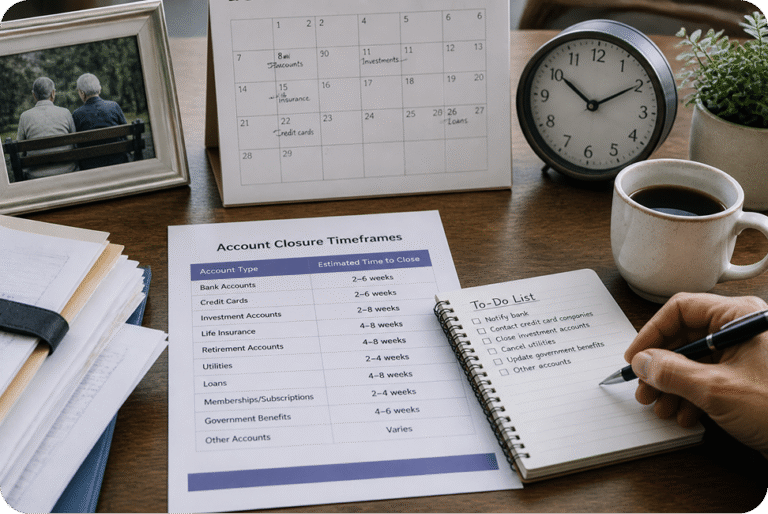
Closing Accounts After Death: How Long Does Each Step Take?
When a loved one passes away, the emotional weight of grief arrives alongside an unexpected avalanche of administrative responsibilities. Among the most pressing concerns for families is understanding the timeline for closing accounts after death and why some accounts take days while others can take well over a year.
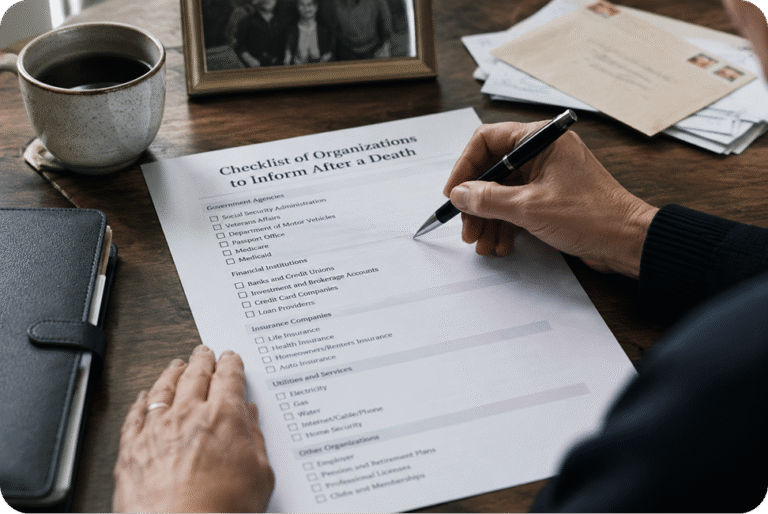
The Complete Checklist of Organizations to Inform After a Death
There is a long list of calls to make, forms to fill out, and accounts to close after a death, and most families have no idea where to begin. Bills keep coming. Subscriptions keep charging. And institutions keep sending mail addressed to someone who is no longer here. That is exactly why Final Closures exists. As a trusted Death Notification Service, we take this entire burden off your shoulders so you can focus on your family, not your to-do list. Knowing who to notify when someone dies is the first step, and this guide is here to walk you through it clearly and simply.