
Key Takeaways
- Initiate the notification process with the appropriate credit bureau and confirm that the deceased person’s credit file has been updated.
- Credit bureaus may ask for a death certificate, proof of authority or relationship, identification, and details about the deceased person.
- A deceased alert tells creditors that the person has died and can help reduce the risk of fraudulent new credit applications in their name.
- Notifying a bureau does not automatically close credit cards or other accounts. Account closure is a separate step.
If you just lost a parent, spouse, or family member, you probably have a long list of things to do. Their credit file might not be at the top, but it still needs attention.
Here’s why: a person’s credit file does not automatically get marked as deceased. Until the credit bureaus receive a death notification, someone could try to use their information to open new credit cards or loans. In fact, new account applications made up 62.1% of attempted identity misuse cases reported to the Identity Theft Resource Center in its 2026 report.
A deceased alert can help reduce that risk. Unlike a credit freeze, it does not restrict access to a living person’s credit file. Instead, the alert tells lenders that the person has died and can help reduce the risk of fraudulent credit applications in their name.
So, what happens to a deceased person’s credit file?
Below, we’ll explain the role of the major credit bureaus, what information may be relevant, and how Final Closures, a Death Notification Service, can initiate the notification process with credit bureaus and other relevant entities on your family’s behalf.
Table of Contents
Steps to Notify Credit Bureaus of a Death

Notifying credit bureaus of a death involves gathering the required information, confirming who is authorized to act, and reporting the death. Requirements may vary by bureau.
Step 1: Gather the Required Documents
Credit bureaus may request documentation to verify the death and the authority or relationship of the person handling the notification. This may include:
- A certified copy of the death certificate
- Proof of authority or relationship, if required
- A copy of your own government-issued ID
- The deceased person’s full name, date of birth, Social Security number, date of death, and last known address
Consider ordering several certified copies if you expect to notify multiple organizations.
Step 2: Confirm You Are Authorized to Act
The person handling the notification may need to provide proof of their authority or relationship to the deceased. Requirements can vary by bureau, so check the current instructions before submitting documents.
Step 3: Report the Death to the Credit Bureaus
Credit bureaus have their own requirements for handling deceased consumers’ credit files, and those requirements may change over time. You can follow the current bureau guidance or work with Final Closures, a Death Notification Service that initiates the notification process with the appropriate credit bureaus on your behalf.
Step 4: Confirm the Credit File Was Updated
After the notification is processed, the bureau may provide information confirming that the deceased person’s file has been updated. Keep any confirmation with your estate records and follow up with the bureau if needed.
Notifying All Three Credit Bureaus
The three nationwide credit bureaus are Equifax, Experian, and TransUnion. Contacting one bureau may result in the other two being notified, but you should still confirm that the deceased person’s credit files have been updated.
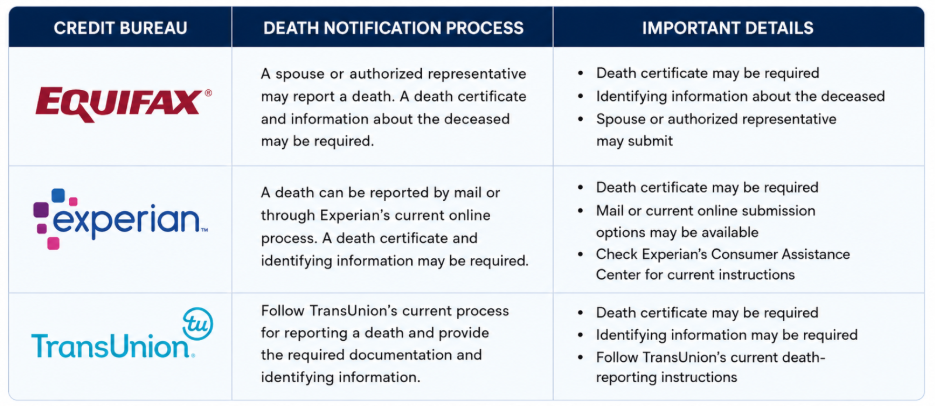
Final Closures is a Death Notification Service that initiates the notification process with credit bureaus and other relevant businesses or entities on your family’s behalf. The receiving organization remains responsible for reviewing the notification and updating its records according to its own procedures.
Reporting requirements can change, so check each bureau’s current instructions before sending documents. If you would rather have support with post-loss financial notifications, our Financial Peace of Mind package can initiate the notification process with credit bureaus and other financial institutions on your behalf.
Why Credit Protection Matters After a Death

A deceased person’s credit file does not automatically update when they die. Starting the notification process promptly can help reduce the period during which fraudulent activity could occur.
What “Ghosting” Identity Theft Means
Identity thieves sometimes target people who have recently died. This practice is sometimes called ghosting identity theft. Thieves may search obituaries and public records, then use the deceased person’s name and Social Security number to apply for new credit before the file is updated.
How to Act Fast
There is no single deadline for reporting a death to the credit bureaus. You can begin the notification process once you have the required documentation and information.
Other Ways to Protect a Deceased Person’s Identity
Beyond credit-bureau notifications, you may also want to monitor the deceased person’s financial and administrative records for unusual activity:
- Confirm that the Social Security Administration has received the death notification
- Watch for unfamiliar credit offers and account statements in the deceased person’s name
- Report suspicious account activity to the credit bureau and creditor promptly
- Keep copies of notification letters and confirmations you receive
Keeping these records and watching for unusual activity can help you spot possible identity theft involving the deceased person’s information.
What Happens After the Credit File Is Updated
Deceased Alerts and Deceased Flags
Once a bureau processes the notification, it adds a deceased indicator, also called a deceased alert or deceased flag, to the credit file. The indicator alerts creditors that the consumer has died and can help reduce the risk of fraudulent new credit applications in that person’s name. A deceased flag is not the same as a standard credit freeze, which restricts access to a living consumer’s credit report.
Credit Cards and Other Open Accounts
A deceased indicator does not close credit cards, loans, or other accounts on its own. Existing accounts may require separate estate-related attention, while creditors remain responsible for handling their accounts according to their own procedures. Final Closures can initiate the notification process with creditors, but each creditor handles account closure or settlement separately.
How to Get a Deceased Person’s Credit Report

Requesting a deceased person’s credit report is separate from adding a deceased indicator. It allows you to review the accounts and activity listed on the report. Authorized individuals may be able to request the report, subject to the bureau’s requirements.
Because creditors don’t report to the same bureau, the three reports may differ. Reviewing all three can reveal open accounts, recent inquiries, or unfamiliar activity worth investigating before the estate is settled. If you spot outdated, inaccurate, or unfamiliar information, you can contact the appropriate credit bureau or creditor and follow its dispute or investigation process.
Protecting a Deceased Person’s Credit
Knowing how to notify credit bureaus of a death gives you one less task to manage during an already difficult time. Gather the required documents, confirm your authority, and start the notification process.
When one nationwide credit bureau is notified, it may notify the other two, but you should still confirm that the relevant credit files have been updated. Final Closures, a Death Notification Service, initiates the notification process with credit bureaus, businesses, and other entities on your family’s behalf. Explore our services to learn more about available support.
Frequently Asked Questions
1. Do I need to notify all three credit bureaus separately?
The three nationwide credit bureaus are Equifax, Experian, and TransUnion. You generally only need to notify one nationwide credit bureau, but you should still confirm that the relevant credit files have been updated.
2. What is a deceased alert?
A deceased alert, or deceased flag, is a note added to a credit file after a bureau confirms the death. It alerts creditors that the consumer is deceased and can help reduce the risk of fraudulent new credit applications in that person’s name. It is not the same as a credit freeze.
3. Can someone steal a dead person’s identity?
Yes. This is sometimes called ghosting, and it happens when someone uses a deceased person’s information to open accounts before the credit file is updated.
4. How soon should I report the death to credit bureaus?
You can start the notification process once you have the required documentation and know who is authorized to act. There is no fixed deadline, but prompt action can help reduce the risk of fraudulent activity.
5. What do the credit bureaus require?
A bureau may ask for a death certificate, proof of your authority or relationship, your ID, and identifying details about the deceased person, such as their Social Security number and date of birth. Requirements can vary, so check the bureau’s current instructions.
6. Can I get the deceased person’s credit report?
An authorized representative may be able to request a deceased person’s credit report, subject to the bureau’s requirements. You may need to provide proof of your authority or relationship, along with information and documentation about the deceased person.
7. Does a deceased alert close their credit cards?
No. Notifying the bureau only adds a deceased indicator; it does not automatically close credit cards, loans, or other accounts. Final Closures initiates the notification process with creditors, while each creditor handles account closure or settlement according to its own procedures.
8. Can you remove a deceased indicator from a credit report?
A correctly reported deceased indicator should not be removed simply because it appears on the credit file. If the information is incorrect, or a living person’s report was mistakenly marked deceased, contact the appropriate credit bureau and follow its process for correcting inaccurate information.